
Launch guides · Uncle J
App development cost starts with the scope
An app price depends on the system behind the screens. Define the essential user journey, the people operating it and the external services it relies on before comparing development quotes.
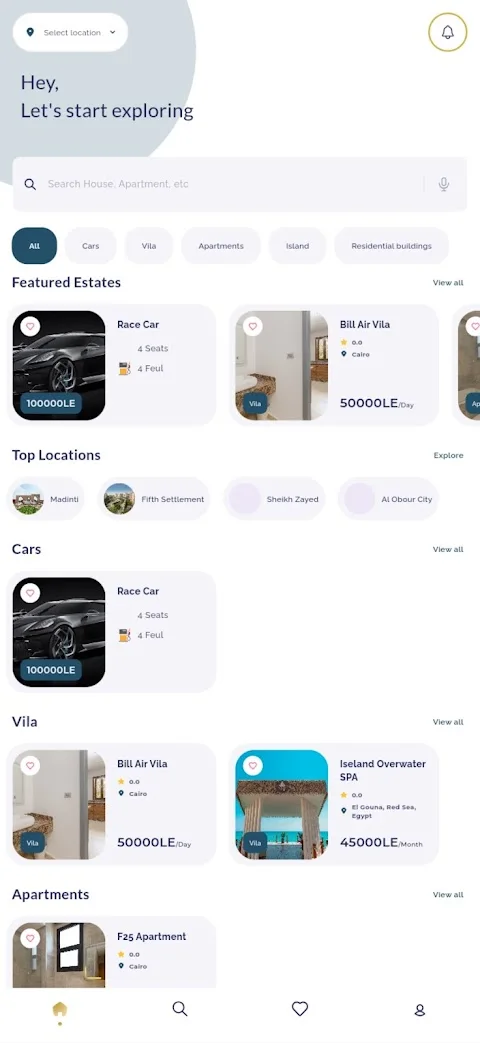
Describe one complete journey
Write what a user is trying to achieve, what information they need and what counts as success. For a property product, that might be finding a suitable listing and sending an enquiry. For a stay service, it might be choosing a location and submitting dates and preferences.
Then describe the business side. Who publishes listings, receives the request, changes its status and responds? An attractive screen is only part of the product; the operating process determines the data, permissions and management tools.
These scope choices change the work
| Choice | Questions for the brief |
|---|---|
| Platforms | Responsive web app, Android, iOS or a combination? How will users access it? |
| Accounts and roles | Guest access, customer accounts, staff and administrators; permissions for each. |
| Data | Listings, images, orders or enquiries; who creates and maintains each record? |
| Integrations | Payments, maps, messages, stock, booking systems or existing business software. |
| Management | Editing, approvals, exports, notifications and handling exceptions. |
| Launch | Device checks, release process, documentation, monitoring and support. |
An enquiry is a different product from a transaction
A form can pass a requested stay to a hospitality team. Instant booking also needs dependable availability, inventory rules, confirmation, cancellation handling and possibly payments. Those responsibilities affect both software and day-to-day operations.
Dar and Alsawah are useful references for discovery and enquiry-focused experiences in our portfolio. Their case studies explain the visible journeys. Use them to identify the decisions your users need to make, then specify any additional booking, payment or administration requirements separately.
Define a smaller first release deliberately
- Choose the one journey that makes the product useful from end to end.
- Separate launch requirements from later ideas and write acceptance criteria for each.
- Prepare realistic sample data and all essential Arabic and English text.
- Confirm which existing systems can supply reliable data and which require manual operation.
- Agree account ownership, source handover and how future changes will be maintained.
Budget for operation as well as development
Ask a proposal to separate design, implementation, testing, integrations and launch support. Then list ongoing hosting, external services, maintenance and content administration. Confirm who owns provider accounts and whether usage-based costs can increase as the product grows.
The platform choice affects release and maintenance work. A web experience and an app-store release have different distribution steps; choose around the user need and required device capabilities. Request a scoped recommendation rather than assuming every business needs every platform at launch.
Compare proposals against behaviour
Give suppliers the same journeys, roles and required integrations. Ask them to explain what is included, what depends on a third party and what remains manual. Review prototypes using real tasks, including empty states, invalid input and failed external requests.
A useful brief ends with an acceptance checklist: the user can complete the core task, the business receives the right information, access rules behave correctly and the owner can operate the system. That creates a stronger basis for a quote and launch decision than a screen count alone.
Common questions
Does the number of screens determine the price?
It is one factor. Roles, data, integrations, administration, device support and exception handling can create more work than the visible screens suggest.
Should a first version include every planned feature?
Choose the smallest complete journey that is useful to users and operationally manageable. Document later features so the initial architecture can account for them.
What should I send for an app quote?
The audience, core task, user roles, required platforms, sample data, integrations, language requirements and the process your team will use to operate the product.